
Intro to PVA Fiber: A Game-Changer in Cementitious Composites
Polyvinyl Alcohol (PVA) fiber has actually become a leading enhancing material in modern-day cement-based compounds, transforming the efficiency and resilience of concrete frameworks. Understood for its high tensile strength, exceptional bond with concrete matrices, and superior resistance to alkaline settings, PVA fiber goes to the leading edge of sophisticated fiber-reinforced concrete (FRC) innovation. Its assimilation into ultra-high-performance concrete (UHPC), crafted cementitious compounds (ECC), and strain-hardening cementitious products (SHCM) marks a considerable jump towards ductile, crack-resistant, and sustainable building and construction services.
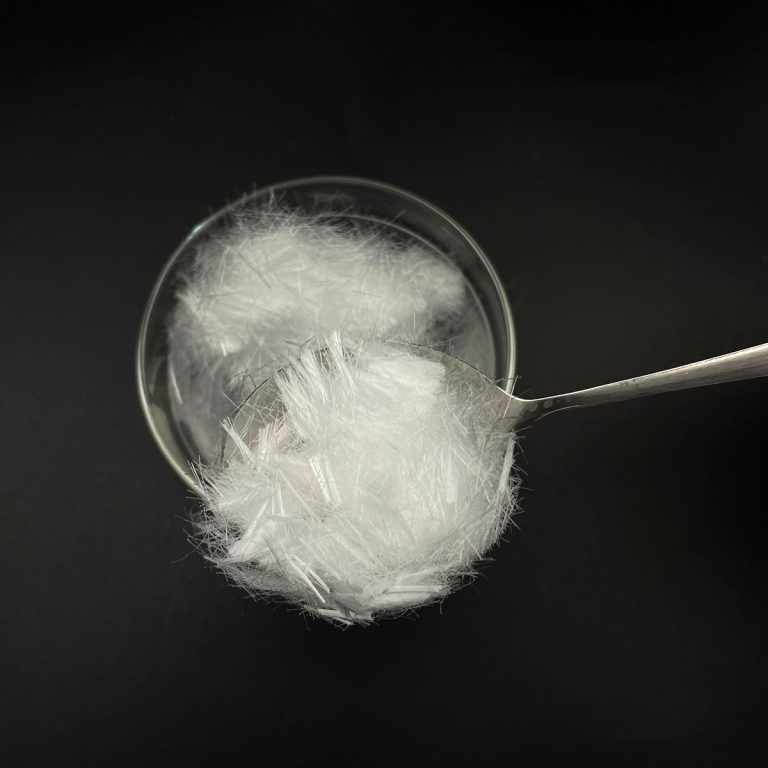
(PVA Fiber)
Chemical and Mechanical Qualities of PVA Fiber
PVA fiber is a synthetic polymer characterized by high hydrophilicity, modest modulus of flexibility, and strong interfacial bonding with cementitious products. Unlike steel fibers, which are susceptible to rust, or polypropylene fibers, which use restricted mechanical support, PVA fibers incorporate versatility with strength– showing tensile toughness surpassing 1,600 MPa and elongation at break around 6– 8%. Their microstructure allows for reliable crack linking, power dissipation, and post-cracking ductility, making them ideal for applications needing strength and influence resistance without endangering workability.
System of Split Control and Ductility Enhancement
The main function of PVA fiber in concrete is to regulate microcrack breeding and enhance post-cracking behavior. When evenly distributed within the matrix, PVA fibers work as micro-reinforcement aspects that connect cracks started throughout filling or shrinkage. This system considerably boosts flexural toughness, fracture toughness, and power absorption ability. In Engineered Cementitious Composites (ECC), PVA fibers allow strain-hardening behavior, where the material exhibits multiple fine cracks rather than disastrous failure. This distinct home simulates the ductility seen in steels, changing generally weak concrete into a quasi-ductile product suitable for seismic-resistant and fatigue-prone structures.
Applications in Facilities, Repair Work, and Prefabricated Equipment
PVA fiber-reinforced concrete is increasingly utilized in framework jobs demanding high sturdiness and resilience. It plays a vital role in passage linings, bridge decks, water containment structures, and blast-resistant structures due to its capability to stand up to spalling under extreme conditions. In structural repair service and retrofitting, PVA-modified mortars offer improved attachment, decreased shrinkage breaking, and improved lasting performance. Upraised parts incorporating PVA fibers gain from controlled cracking, dimensional security, and quicker demolding cycles. Furthermore, its compatibility with automated casting procedures makes it fit for modular and 3D-printed building systems.
Sustainability and Ecological Perks
Past mechanical performance, PVA fiber adds to sustainable building and construction techniques. By allowing thinner, lighter, and longer-lasting structures, it lowers total material consumption and personified carbon. Compared to steel fiber-reinforced concrete, PVA fiber eliminates problems related to corrosion discoloration and galvanic rust, prolonging service life and reducing maintenance prices. Some formulas currently integrate bio-based or partly eco-friendly variations, aligning with eco-friendly structure requirements and circular economic situation principles. As ecological regulations tighten, PVA fiber offers a practical alternative that balances architectural integrity with ecological duty.
Difficulties and Limitations in Practical Application
Despite its benefits, the adoption of PVA fiber encounters obstacles related to set you back, diffusion, and healing sensitivity. PVA fibers are more costly than traditional artificial fibers, restricting their use in budget-sensitive applications. Attaining uniform dispersion calls for specialized mixing methods, as incorrect handling can bring about balling or partition. Additionally, PVA fibers are delicate to extended wet-dry biking, which might affect long-term bond efficiency otherwise properly resolved via fiber surface treatment or crossbreed fiber methods. Resolving these issues calls for continued research into cost-efficient manufacturing methods and efficiency optimization.
Advancements Driving Next-Generation PVA Fiber Technologies
( PVA Fiber)
Ongoing improvements in fiber engineering are expanding the capabilities of PVA fiber in building and construction. Surface adjustment methods such as plasma treatment, etching, and finish with nano-silica or polymer layers are enhancing fiber-matrix communication and sturdiness. Crossbreed systems integrating PVA with various other fibers– such as carbon or lava– are being explored to maximize mechanical properties across different packing scenarios. Scientists are also creating clever PVA fibers embedded with sensing capacities for real-time architectural health monitoring. These innovations are pressing the borders of what fiber-reinforced concrete can attain, paving the way for smart, flexible structure products.
Market Fads and International Market Overview
The worldwide market for PVA fiber in construction is growing progressively, driven by increasing need for high-performance concrete in Asia-Pacific, North America, and Europe. Federal governments and sector leaders are investing in resilient facilities, calamity mitigation, and sustainable metropolitan development– essential motorists for PVA fiber adoption. Leading chemical and construction product suppliers are expanding product, boosting technical assistance, and working together with scholastic organizations to improve application procedures. Digital tools such as AI-driven mix design software application and IoT-enabled fiber application systems are more improving implementation, boosting performance, and guaranteeing consistent high quality throughout large projects.
Future Leads: Combination with Smart and Resilient Building Ecosystems
Looking ahead, PVA fiber will certainly play a central role in shaping the next generation of smart and resilient building ecosystems. Integration with electronic twin systems will certainly enable engineers to mimic fiber-reinforced concrete behavior under real-world conditions, optimizing style before release. Developments in self-healing concrete incorporating PVA fibers and microcapsules are expected to prolong architectural lifespans and decrease lifecycle prices. Furthermore, as the building and construction market welcomes decarbonization and automation, PVA fiber stands out as a key enabler of lightweight, high-strength, and environmentally responsive structure products customized for the future.
Supplier
Cabr-Concrete is a supplier of Concrete Admixture under TRUNNANO with over 12 years of experience in nano-building energy conservation and nanotechnology development. It accepts payment via Credit Card, T/T, West Union and Paypal. TRUNNANO will ship the goods to customers overseas through FedEx, DHL, by air, or by sea. If you are looking for high quality pva fibers concrete effect compressive strength, please feel free to contact us and send an inquiry(sales5@nanotrun.com).
Tags: pva fiber,polyvinyl alcohol fiber, pva concrete
All articles and pictures are from the Internet. If there are any copyright issues, please contact us in time to delete.
Inquiry us
Error: Contact form not found.