
Boron Carbide Ceramics: Revealing the Scientific Research, Characteristic, and Revolutionary Applications of an Ultra-Hard Advanced Material
1. Introduction to Boron Carbide: A Product at the Extremes
Boron carbide (B FOUR C) stands as one of one of the most amazing artificial materials known to modern-day materials science, identified by its setting amongst the hardest materials on Earth, went beyond only by ruby and cubic boron nitride.

(Boron Carbide Ceramic)
First manufactured in the 19th century, boron carbide has actually developed from a research laboratory inquisitiveness right into a vital component in high-performance design systems, defense innovations, and nuclear applications.
Its one-of-a-kind combination of severe firmness, reduced thickness, high neutron absorption cross-section, and excellent chemical stability makes it crucial in atmospheres where conventional materials stop working.
This post supplies an extensive yet easily accessible expedition of boron carbide ceramics, delving right into its atomic framework, synthesis approaches, mechanical and physical properties, and the wide range of advanced applications that take advantage of its outstanding characteristics.
The objective is to bridge the gap between clinical understanding and practical application, supplying readers a deep, organized insight into just how this extraordinary ceramic product is shaping modern-day technology.
2. Atomic Structure and Basic Chemistry
2.1 Crystal Latticework and Bonding Characteristics
Boron carbide crystallizes in a rhombohedral structure (area group R3m) with an intricate system cell that suits a variable stoichiometry, typically varying from B ₄ C to B ₁₀. FIVE C.
The essential foundation of this framework are 12-atom icosahedra composed largely of boron atoms, connected by three-atom direct chains that extend the crystal latticework.
The icosahedra are highly steady clusters due to strong covalent bonding within the boron network, while the inter-icosahedral chains– often consisting of C-B-C or B-B-B configurations– play an essential role in figuring out the material’s mechanical and digital properties.
This one-of-a-kind design results in a product with a high level of covalent bonding (over 90%), which is straight in charge of its phenomenal firmness and thermal stability.
The visibility of carbon in the chain websites boosts architectural stability, however variances from ideal stoichiometry can present problems that affect mechanical efficiency and sinterability.
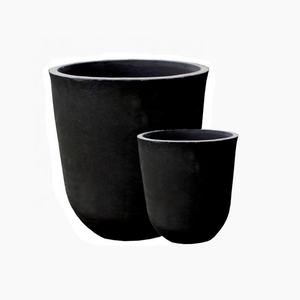
(Boron Carbide Ceramic)
2.2 Compositional Irregularity and Defect Chemistry
Unlike lots of ceramics with taken care of stoichiometry, boron carbide shows a wide homogeneity variety, allowing for considerable variation in boron-to-carbon proportion without disrupting the general crystal framework.
This versatility enables customized residential or commercial properties for particular applications, though it additionally introduces obstacles in handling and performance uniformity.
Problems such as carbon shortage, boron jobs, and icosahedral distortions prevail and can impact solidity, fracture durability, and electric conductivity.
For instance, under-stoichiometric make-ups (boron-rich) have a tendency to show higher firmness yet decreased crack sturdiness, while carbon-rich variations might reveal better sinterability at the expenditure of firmness.
Recognizing and controlling these problems is an essential focus in advanced boron carbide research study, specifically for optimizing performance in shield and nuclear applications.
3. Synthesis and Processing Techniques
3.1 Primary Production Methods
Boron carbide powder is mostly produced via high-temperature carbothermal decrease, a process in which boric acid (H TWO BO FIVE) or boron oxide (B ₂ O ₃) is responded with carbon sources such as petroleum coke or charcoal in an electrical arc heating system.
The reaction continues as adheres to:
B TWO O FOUR + 7C → 2B ₄ C + 6CO (gas)
This procedure takes place at temperatures surpassing 2000 ° C, calling for substantial power input.
The resulting crude B ₄ C is after that grated and detoxified to eliminate residual carbon and unreacted oxides.
Alternative methods consist of magnesiothermic decrease, laser-assisted synthesis, and plasma arc synthesis, which use finer control over bit size and purity however are generally restricted to small-scale or specific production.
3.2 Challenges in Densification and Sintering
Among one of the most significant difficulties in boron carbide ceramic manufacturing is accomplishing full densification as a result of its strong covalent bonding and reduced self-diffusion coefficient.
Conventional pressureless sintering usually causes porosity levels above 10%, drastically compromising mechanical toughness and ballistic efficiency.
To conquer this, progressed densification strategies are used:
Warm Pushing (HP): Entails synchronised application of warm (usually 2000– 2200 ° C )and uniaxial pressure (20– 50 MPa) in an inert atmosphere, generating near-theoretical density.
Hot Isostatic Pressing (HIP): Applies high temperature and isotropic gas pressure (100– 200 MPa), getting rid of inner pores and boosting mechanical integrity.
Stimulate Plasma Sintering (SPS): Makes use of pulsed straight current to swiftly warm the powder compact, allowing densification at lower temperatures and much shorter times, maintaining fine grain structure.
Additives such as carbon, silicon, or shift metal borides are frequently presented to promote grain boundary diffusion and improve sinterability, though they should be very carefully controlled to prevent degrading firmness.
4. Mechanical and Physical Properties
4.1 Exceptional Hardness and Wear Resistance
Boron carbide is renowned for its Vickers solidity, usually ranging from 30 to 35 Grade point average, positioning it amongst the hardest well-known materials.
This severe solidity translates right into exceptional resistance to abrasive wear, making B ₄ C excellent for applications such as sandblasting nozzles, cutting devices, and wear plates in mining and drilling tools.
The wear system in boron carbide includes microfracture and grain pull-out rather than plastic deformation, an attribute of brittle porcelains.
Nevertheless, its low crack durability (typically 2.5– 3.5 MPa · m ONE / ²) makes it vulnerable to crack breeding under effect loading, demanding careful design in dynamic applications.
4.2 Reduced Density and High Specific Stamina
With a density of roughly 2.52 g/cm SIX, boron carbide is among the lightest architectural porcelains readily available, supplying a substantial advantage in weight-sensitive applications.
This reduced thickness, combined with high compressive stamina (over 4 GPa), results in a remarkable particular stamina (strength-to-density proportion), critical for aerospace and defense systems where decreasing mass is paramount.
For example, in individual and lorry shield, B FOUR C offers superior defense per unit weight compared to steel or alumina, allowing lighter, much more mobile safety systems.
4.3 Thermal and Chemical Stability
Boron carbide shows excellent thermal security, keeping its mechanical residential or commercial properties approximately 1000 ° C in inert ambiences.
It has a high melting factor of around 2450 ° C and a reduced thermal expansion coefficient (~ 5.6 × 10 ⁻⁶/ K), adding to excellent thermal shock resistance.
Chemically, it is extremely resistant to acids (other than oxidizing acids like HNO TWO) and liquified steels, making it appropriate for use in severe chemical environments and nuclear reactors.
Nevertheless, oxidation comes to be substantial above 500 ° C in air, developing boric oxide and co2, which can deteriorate surface integrity with time.
Protective finishings or environmental protection are usually needed in high-temperature oxidizing conditions.
5. Trick Applications and Technological Influence
5.1 Ballistic Security and Armor Solutions
Boron carbide is a cornerstone product in contemporary light-weight shield as a result of its exceptional combination of solidity and reduced density.
It is extensively made use of in:
Ceramic plates for body shield (Level III and IV defense).
Automobile shield for armed forces and law enforcement applications.
Airplane and helicopter cockpit defense.
In composite armor systems, B FOUR C tiles are normally backed by fiber-reinforced polymers (e.g., Kevlar or UHMWPE) to take in recurring kinetic power after the ceramic layer fractures the projectile.
In spite of its high solidity, B ₄ C can undertake “amorphization” under high-velocity impact, a sensation that restricts its efficiency against really high-energy threats, motivating ongoing study into composite adjustments and hybrid porcelains.
5.2 Nuclear Engineering and Neutron Absorption
Among boron carbide’s most crucial roles is in atomic power plant control and safety and security systems.
As a result of the high neutron absorption cross-section of the ¹⁰ B isotope (3837 barns for thermal neutrons), B FOUR C is used in:
Control rods for pressurized water reactors (PWRs) and boiling water reactors (BWRs).
Neutron protecting components.
Emergency situation shutdown systems.
Its capability to absorb neutrons without considerable swelling or destruction under irradiation makes it a preferred product in nuclear environments.
However, helium gas generation from the ¹⁰ B(n, α)seven Li reaction can cause interior stress accumulation and microcracking over time, necessitating mindful design and monitoring in lasting applications.
5.3 Industrial and Wear-Resistant Elements
Past protection and nuclear sectors, boron carbide finds substantial usage in commercial applications requiring severe wear resistance:
Nozzles for rough waterjet cutting and sandblasting.
Liners for pumps and shutoffs managing destructive slurries.
Cutting devices for non-ferrous products.
Its chemical inertness and thermal stability allow it to carry out dependably in aggressive chemical handling settings where metal tools would wear away rapidly.
6. Future Leads and Research Frontiers
The future of boron carbide porcelains depends on conquering its integral restrictions– specifically reduced fracture toughness and oxidation resistance– through progressed composite style and nanostructuring.
Current study directions consist of:
Advancement of B ₄ C-SiC, B ₄ C-TiB TWO, and B FOUR C-CNT (carbon nanotube) composites to boost durability and thermal conductivity.
Surface alteration and layer innovations to improve oxidation resistance.
Additive production (3D printing) of complex B ₄ C parts using binder jetting and SPS techniques.
As materials science remains to advance, boron carbide is positioned to play an also better duty in next-generation modern technologies, from hypersonic automobile elements to advanced nuclear blend activators.
Finally, boron carbide ceramics represent a pinnacle of engineered product efficiency, integrating severe firmness, low density, and unique nuclear homes in a solitary substance.
Through continuous technology in synthesis, handling, and application, this remarkable product remains to push the borders of what is feasible in high-performance engineering.
Provider
Advanced Ceramics founded on October 17, 2012, is a high-tech enterprise committed to the research and development, production, processing, sales and technical services of ceramic relative materials and products. Our products includes but not limited to Boron Carbide Ceramic Products, Boron Nitride Ceramic Products, Silicon Carbide Ceramic Products, Silicon Nitride Ceramic Products, Zirconium Dioxide Ceramic Products, etc. If you are interested, please feel free to contact us.(nanotrun@yahoo.com)
Tags: Boron Carbide, Boron Ceramic, Boron Carbide Ceramic
All articles and pictures are from the Internet. If there are any copyright issues, please contact us in time to delete.
Inquiry us
Error: Contact form not found.